One mature Canary Island date palm at Las Palmas in Old Escondido.
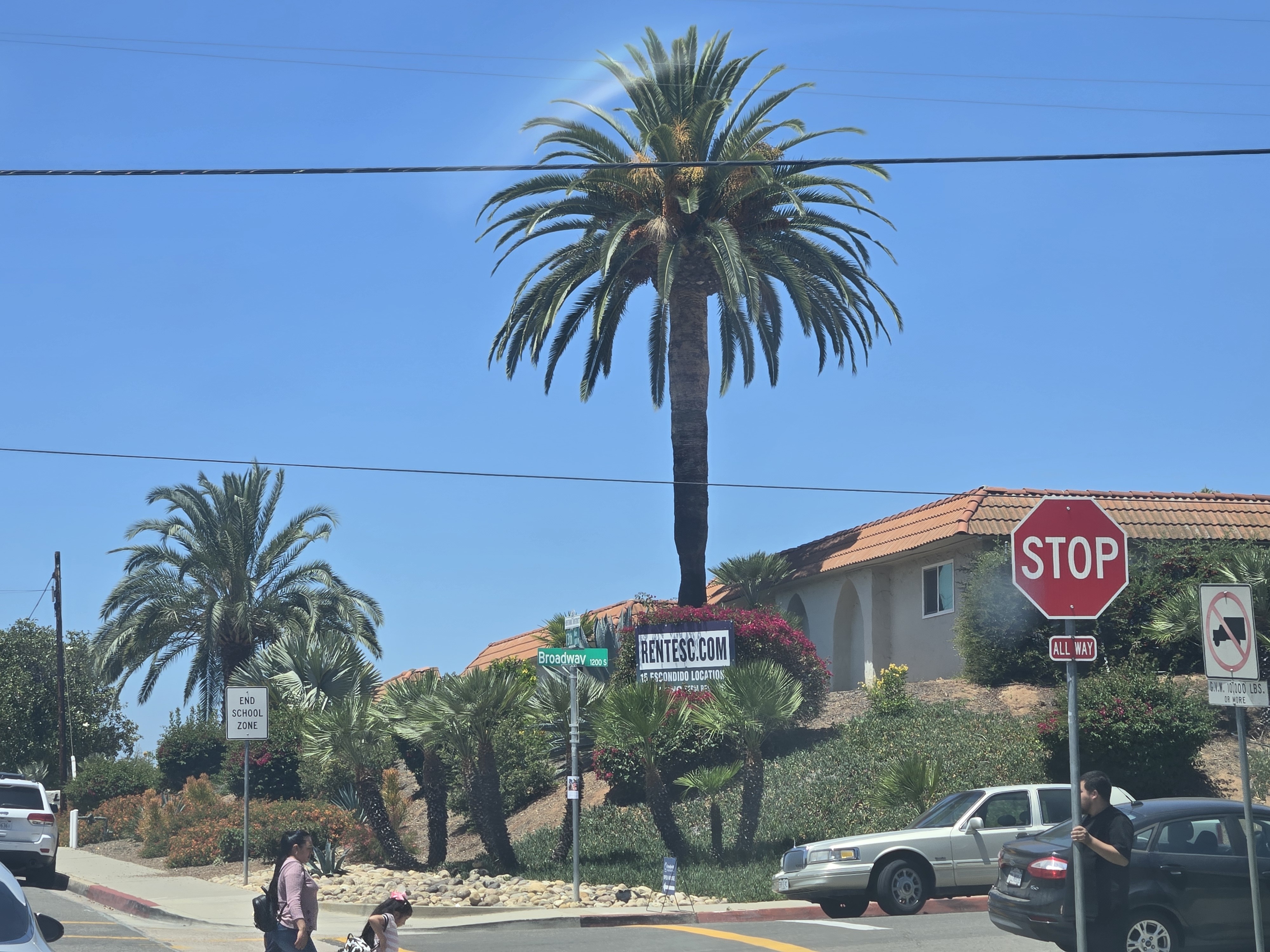
On Sunday evening, July 13, while inspecting my own Canary Island date palm (CIDP), I heard saws coming from just down the way.
I walked toward the sound of the saws at Las Palmas apartments.
To my shock, the Canary Island date palm I had photographed two days earlier was gone.
The crew was working. The manager was not available. A fresh stump marked where the palm had stood.
Two days earlier, on July 11, I had sent updated photographs to the property contact at aptservice@rentesc.com. The center of the palm was failing while much of the outer canopy still looked green from a distance. I believed the pattern was consistent with SAPW. The email, like the earlier messages, went unanswered.
Watch the documented sequence
A 75-second film showing the observed decline, attempted notification, and documented removal.
Why this palm mattered to the property
Las Palmas has an impressive mature palm landscape. Canary Island date palms rise above the entrance and red-tile buildings while other established palms frame the slope. The property is recognizable from the street before you ever read the sign.
The landscape is broader than one palm. A silver date palm, a Bismarck palm, the healthy front CIDP, and several fan palms give the property its established look.
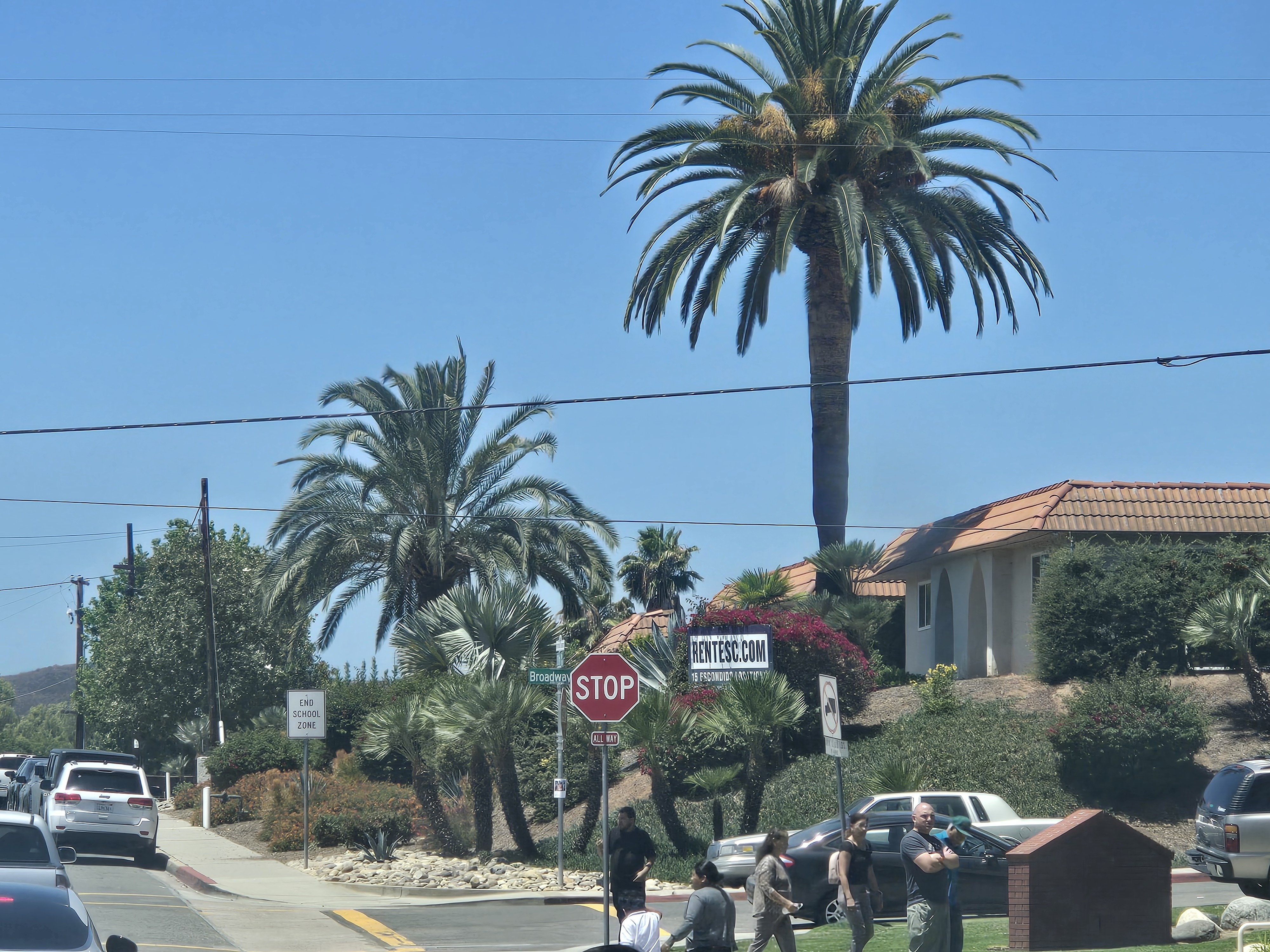
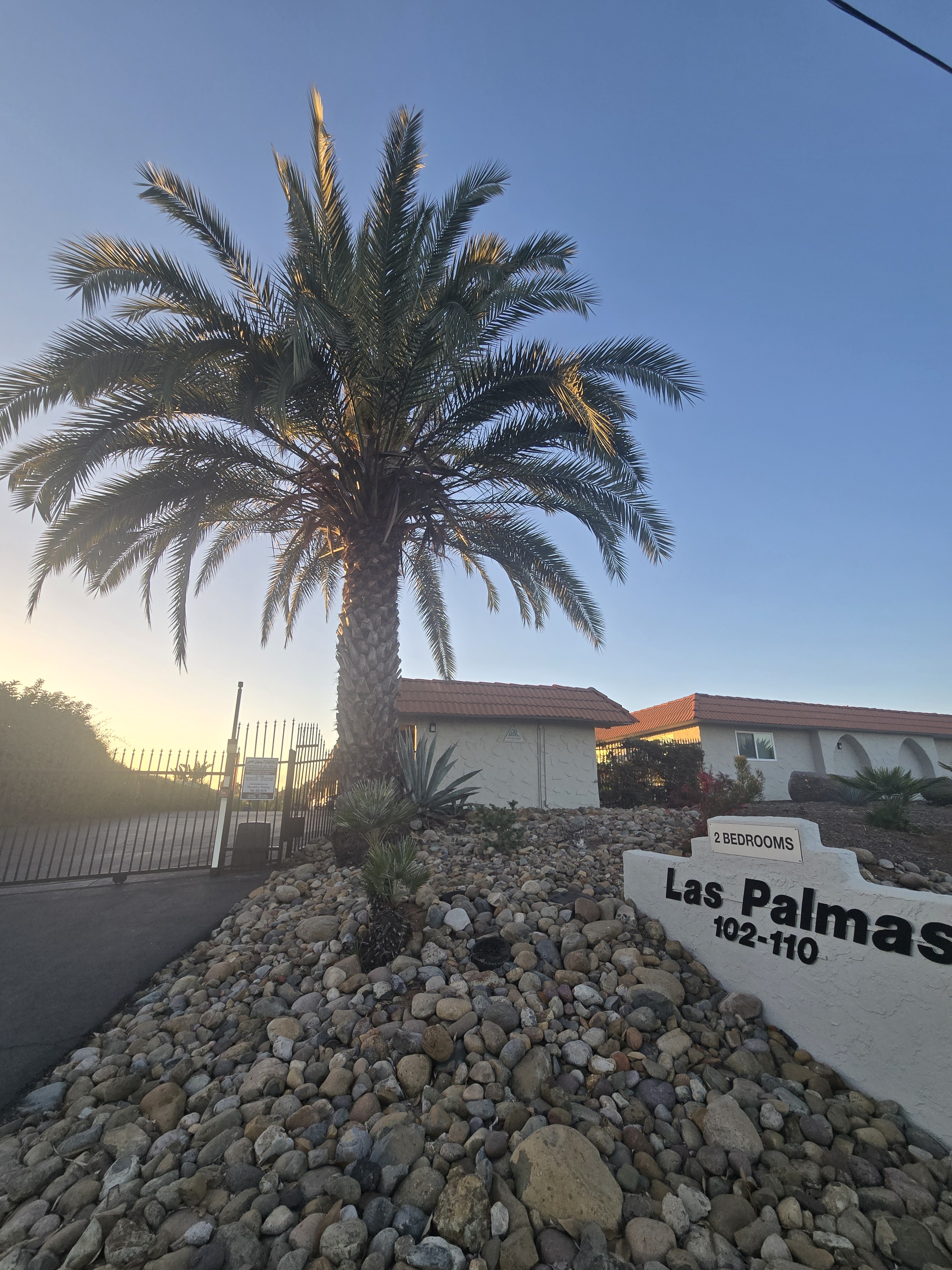
One of those palms was already changing. The photograph below ties the actual subject to the Las Palmas entrance, sign, slope, utility poles, and surrounding vegetation.
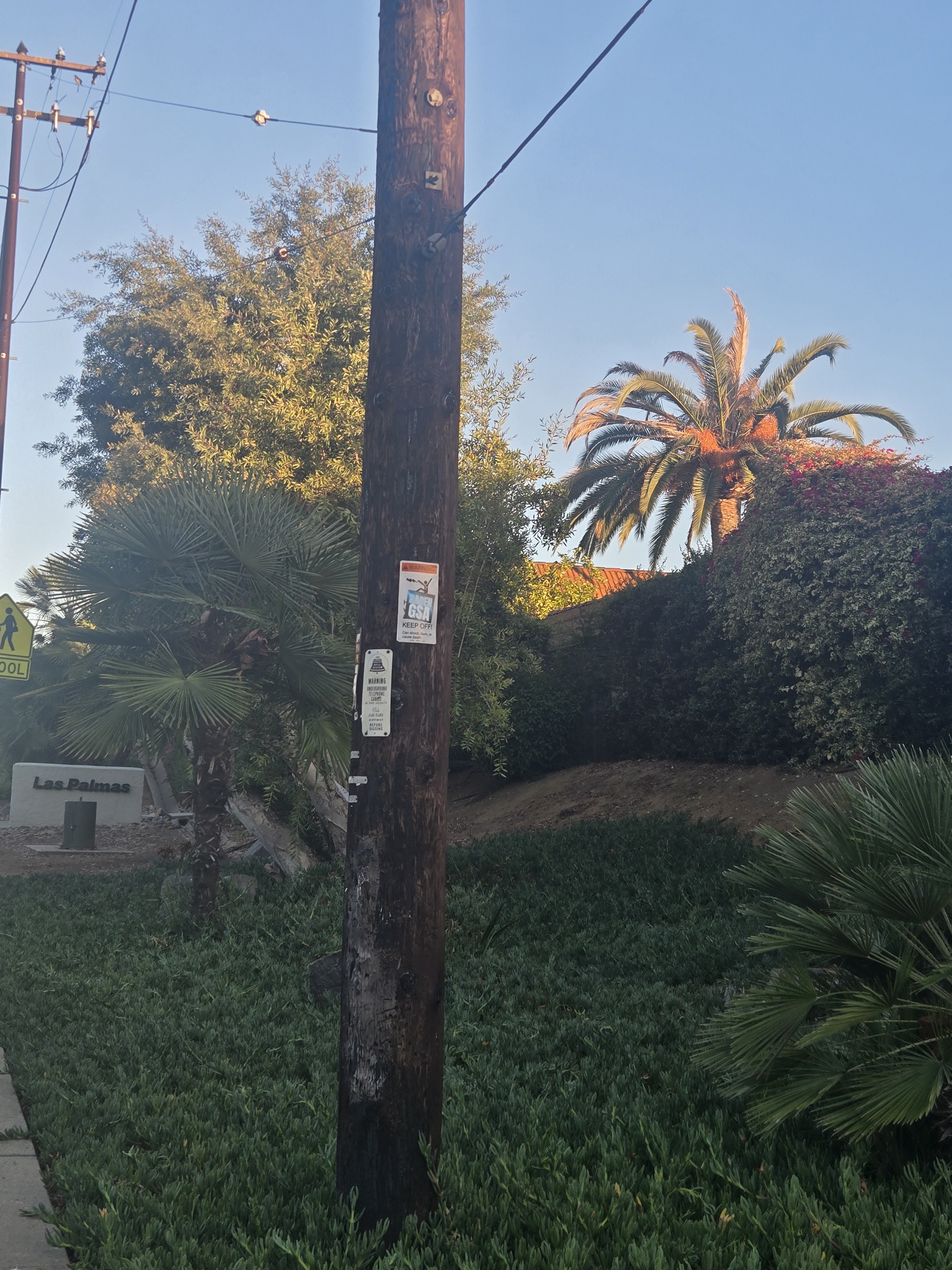
The closer view shows the same subject before removal. The newest central growth was brown and failing while much of the outer canopy still remained green.
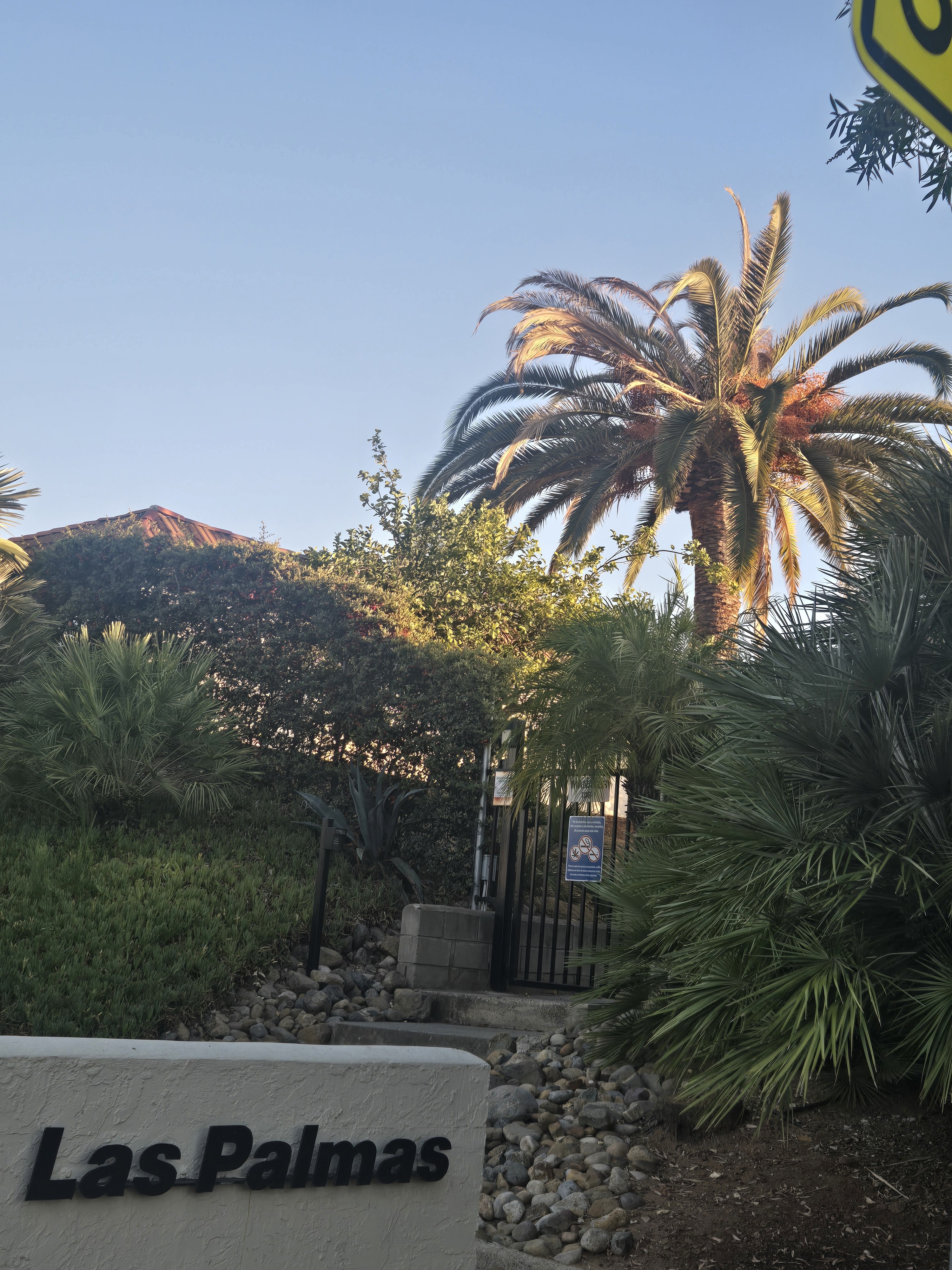
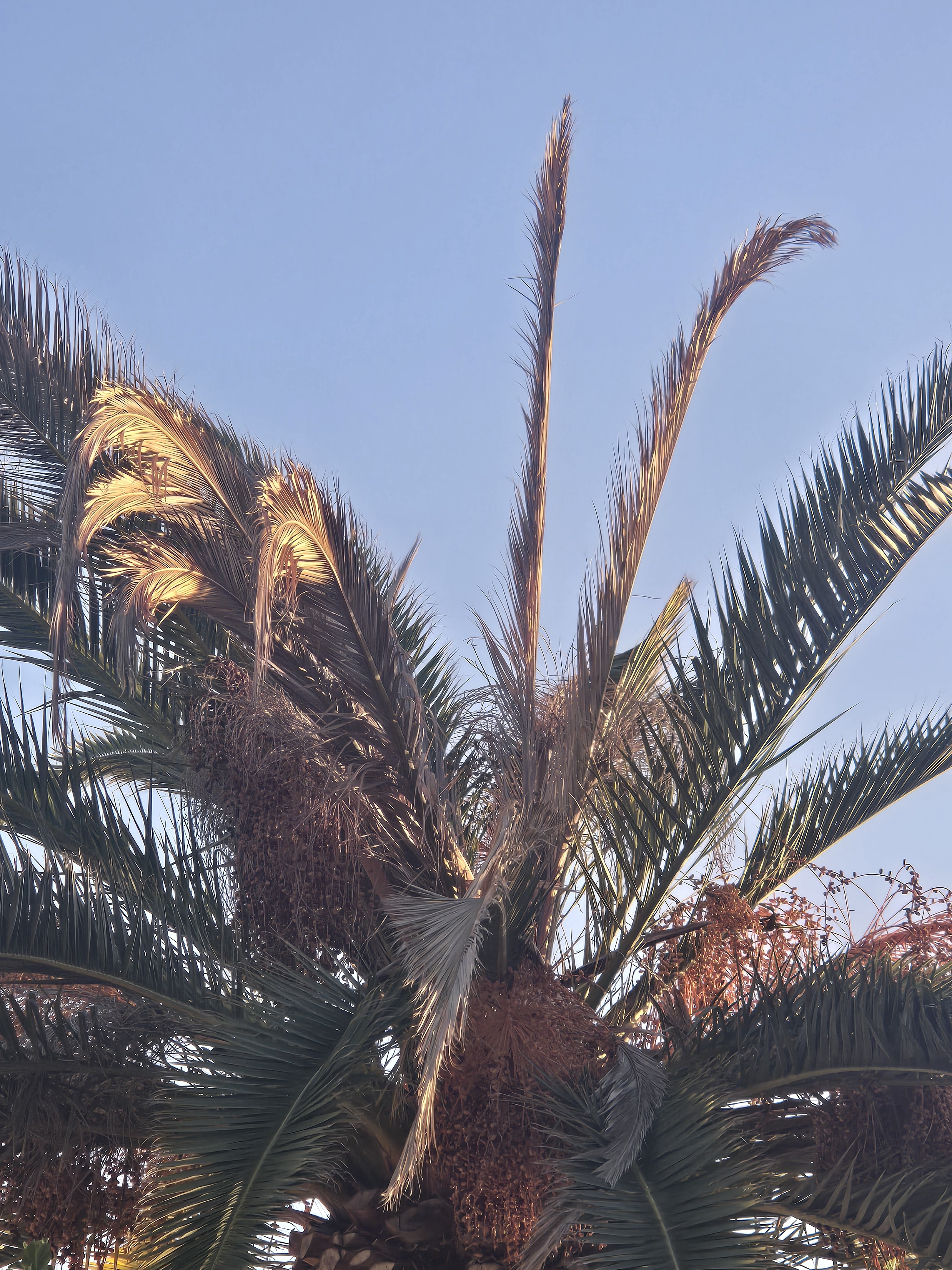
The crown photographs explain why the July 11 email mattered. The newest central growth was brown and failing. Adjacent inner fronds were collapsing, while the outer canopy still held enough green to make the palm look less urgent from a distance.
The July 11 email was not the first contact I had made to Las Palmas. I sent an introduction and palm-protection outreach on June 5, Las Palmas palm photography and SAPW awareness on June 9, and additional mature-palm and property-value outreach on June 12. The July 11 message was different: it included specific updated photographs of the failing crown on this specific CIDP and asked that they be forwarded to the person responsible for the palms. By July 13, no response had arrived.
Then the saws started.
I believe this palm was affected by South American palm weevil based on the decline pattern and what I have observed from palm weevil activity nearby. No public diagnosis has been released.
I based that assessment on the pattern I could see: the newest central growth had browned and failed, nearby inner fronds had collapsed, and much of the outer canopy was still green. The palm went from crown failure to removal quickly, in an area where South American palm weevil pressure is already part of the local landscape.
I did not inspect the dismantled crown.
The center told the story before the stump did.
Failing central growth in a mature Canary Island date palm is not background noise. By the time central-crown failure becomes obvious, the useful options may already be narrowing.
Removal of a mature palm of this size is not a minor landscape expense. Whatever the final cost, prevention and early monitoring are far the cheaper conversation to have first. Mature-palm removal alone can become a substantial expense, potentially running into thousands of dollars.
The timing is notable. The reason for the timing is unknown.
The dismantling findings and the reason for the removal decision have not been made public.
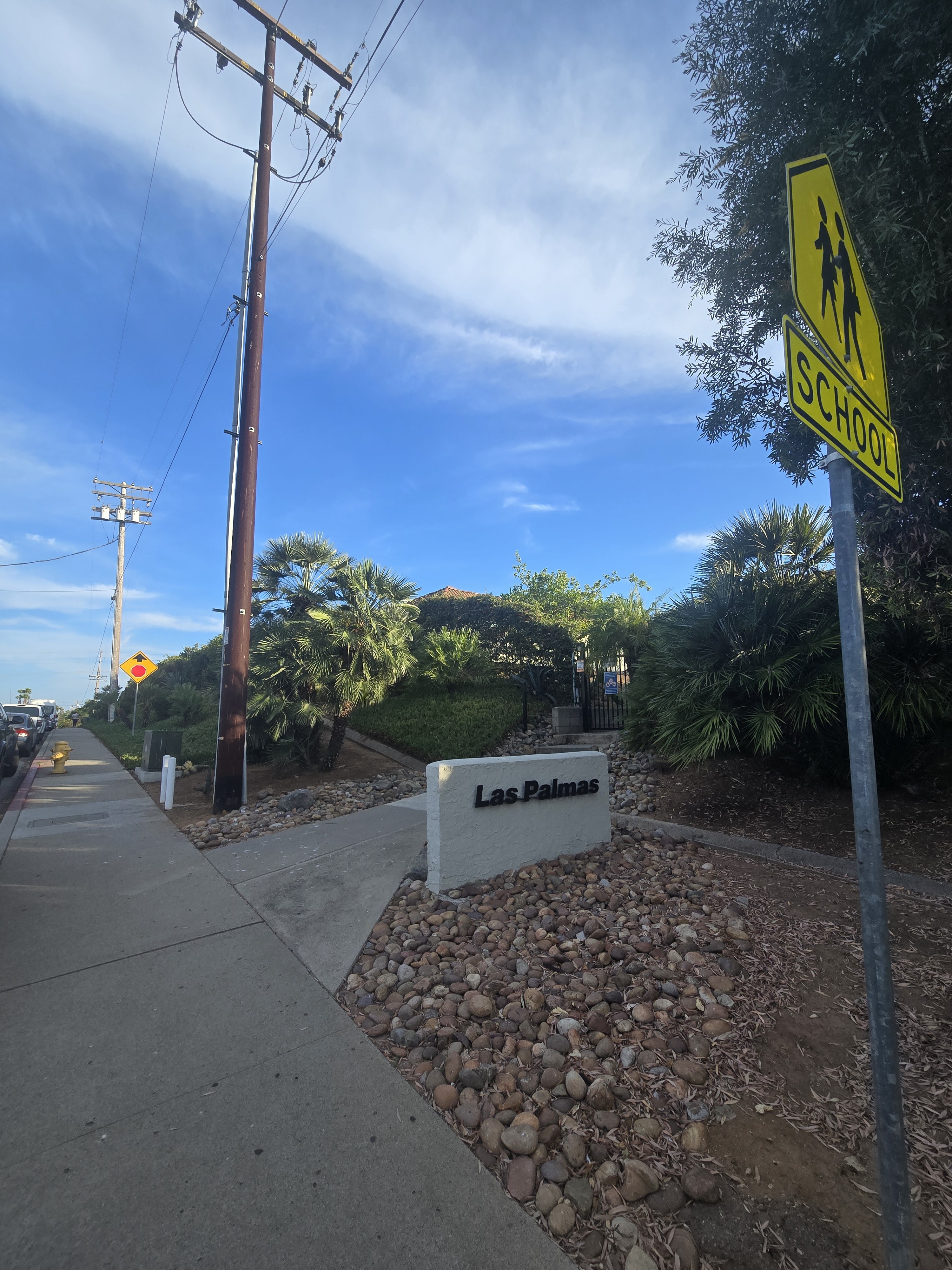
The entrance remained. The palm did not. A closer final-condition photograph shows the fresh stump at the same documented location; the camera angle is not identical, but the fixed slope, red-tile building, retaining wall, and nearby fan palms carry the continuity.
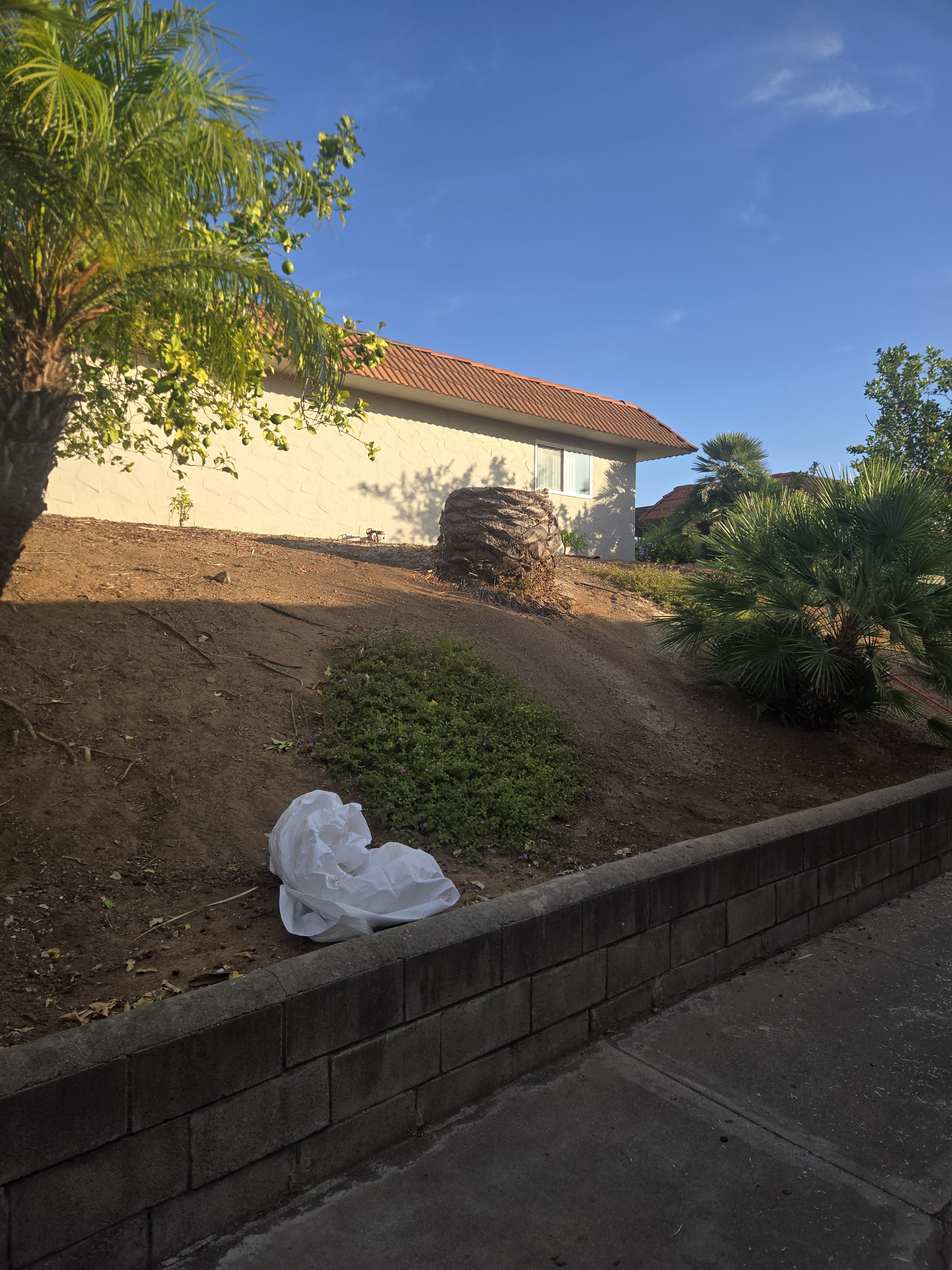
What Remains
One palm is gone. The mature palms standing prominently near the front of the property are still there. I hope their story does not end the same way.
Just uphill and around the corner, I am monitoring my own mature Canary Island date palm after confirmed South American palm weevil activity. That separate ongoing record is one reason I recognized the Las Palmas crown pattern so quickly. It is related context, not proof that both palms share an identical diagnosis - however likely. Related monitoring entry
The entrance and remaining palms bring the story back to the property itself: still beautiful, still recognizable, and now diminished by one mature Canary Island palm.
I will keep watching the palms that remain. Silence does not stop the landscape from changing.
San Diego Palm Protection · Palm Journal · Documented Loss