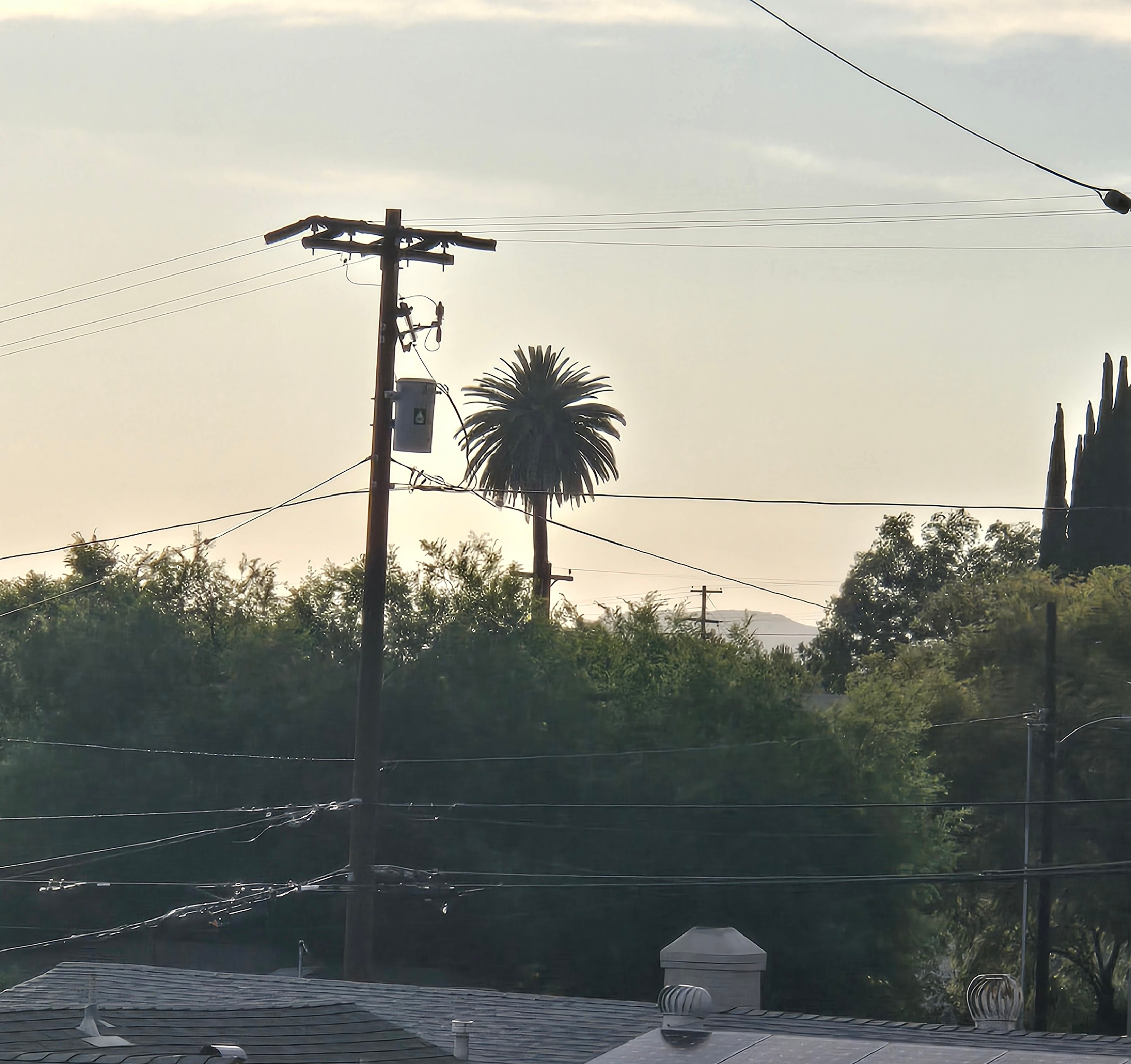
Living in Old Escondido, one of the things I notice every day is how many mature Canary Island Date Palms are tucked throughout the neighborhood. They rise above historic homes, apartment courtyards, churches, side streets, and older properties that have been shaped by decades of growth.
The more time I spend walking these streets, the more convinced I become that Old Escondido may quietly have one of the finest collections of mature Canary Island Date Palms in North County, maybe even Southern California.
That may sound like an exaggeration until you start paying attention. Street after street reveals mature specimens with massive trunks, full crowns, and the kind of presence that only comes with age.
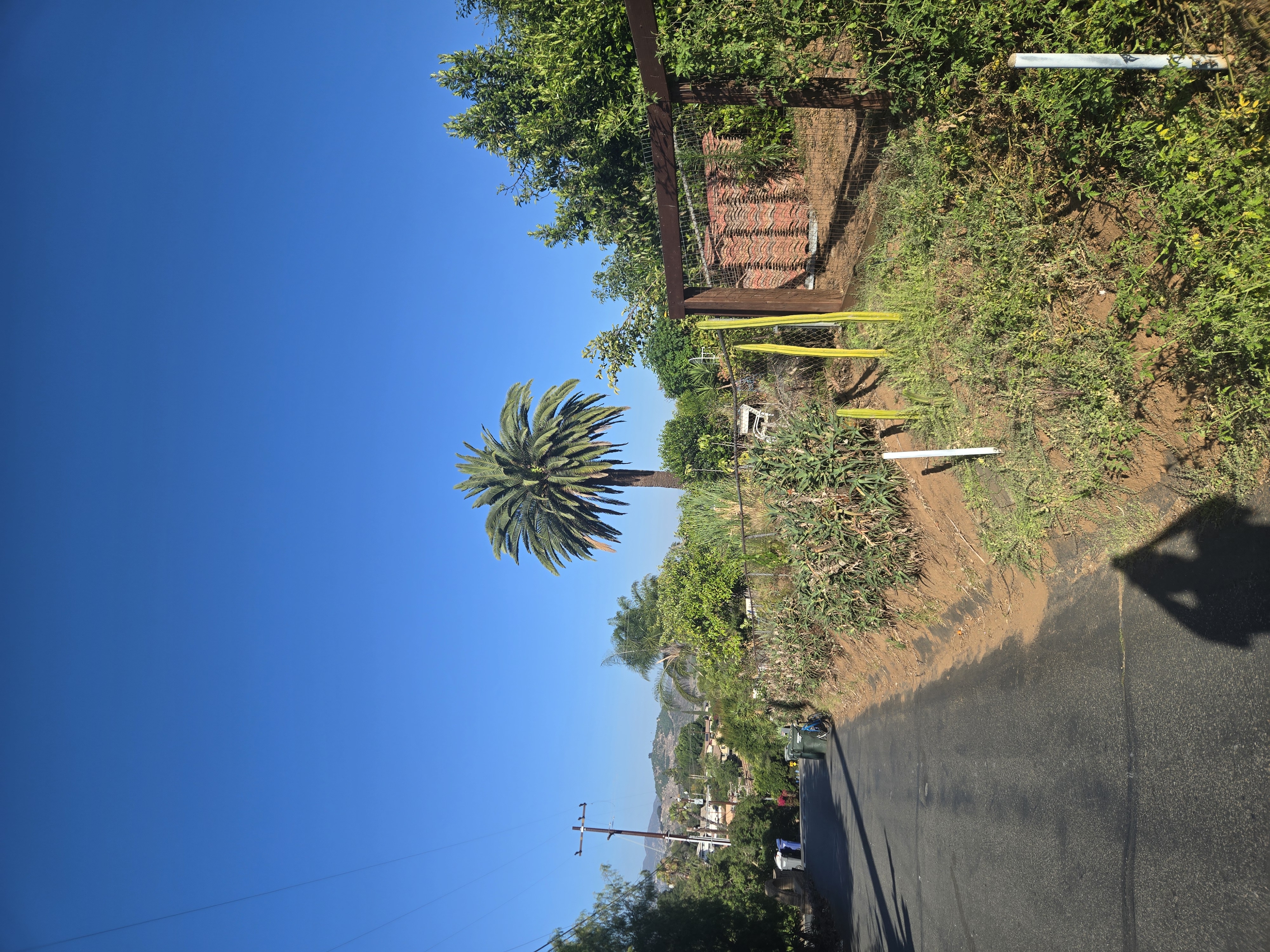
Mature Canary Island Date Palms help define the skyline and character of Old Escondido.
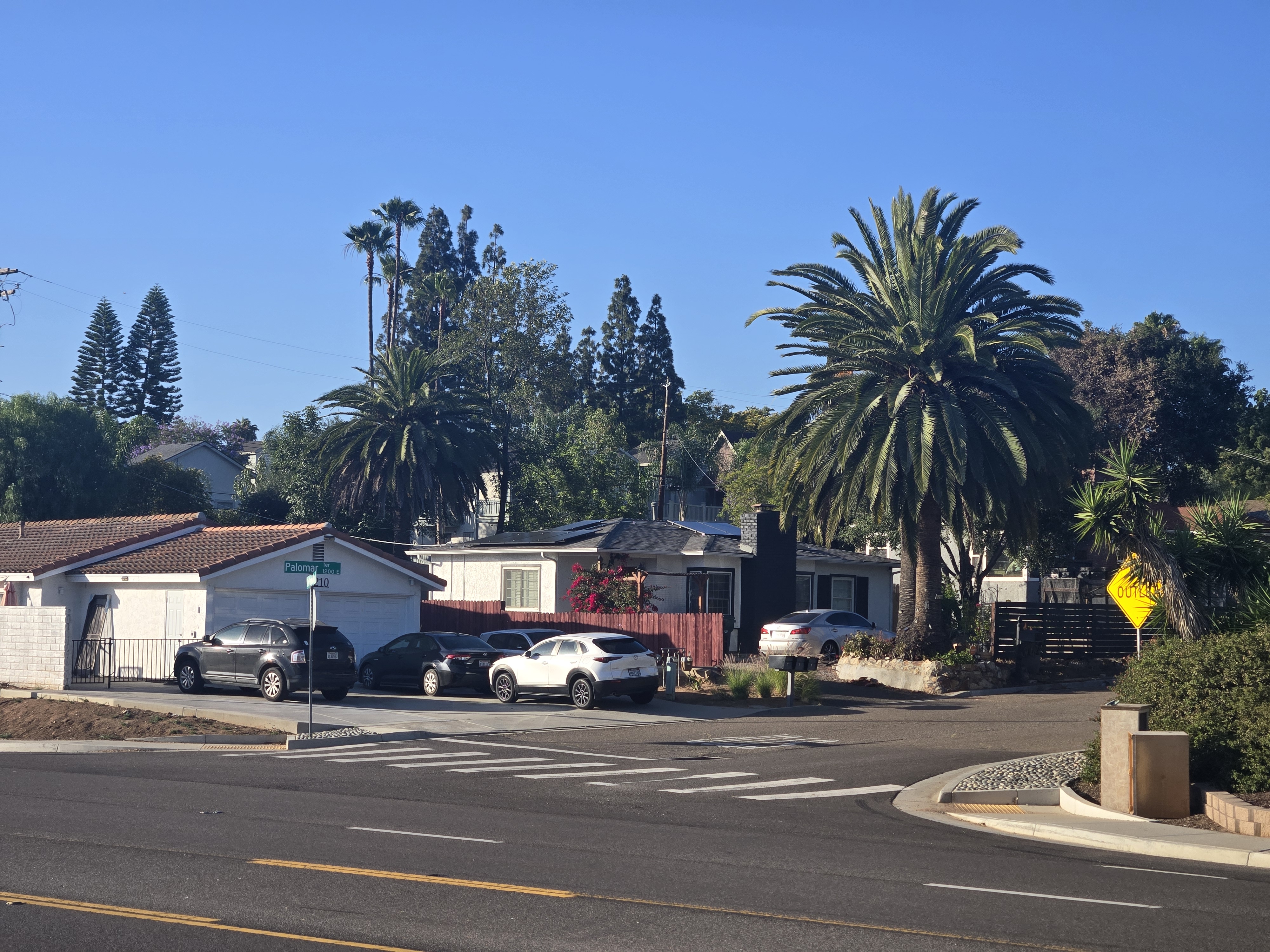
Many of these palms stand near historic homes, older streets, and long-established neighborhood landscapes.
Look above the rooflines
Many of these palms took decades to reach their current size. They are not interchangeable with a new planting from a nursery. The height, trunk, crown, and relationship to the property came with time.
You see them at intersections, behind rooftops, above apartment buildings, and standing alone in older residential lots. Some are formal landscape features. Others feel almost hidden, visible only from certain streets, certain angles, or during a late afternoon walk.
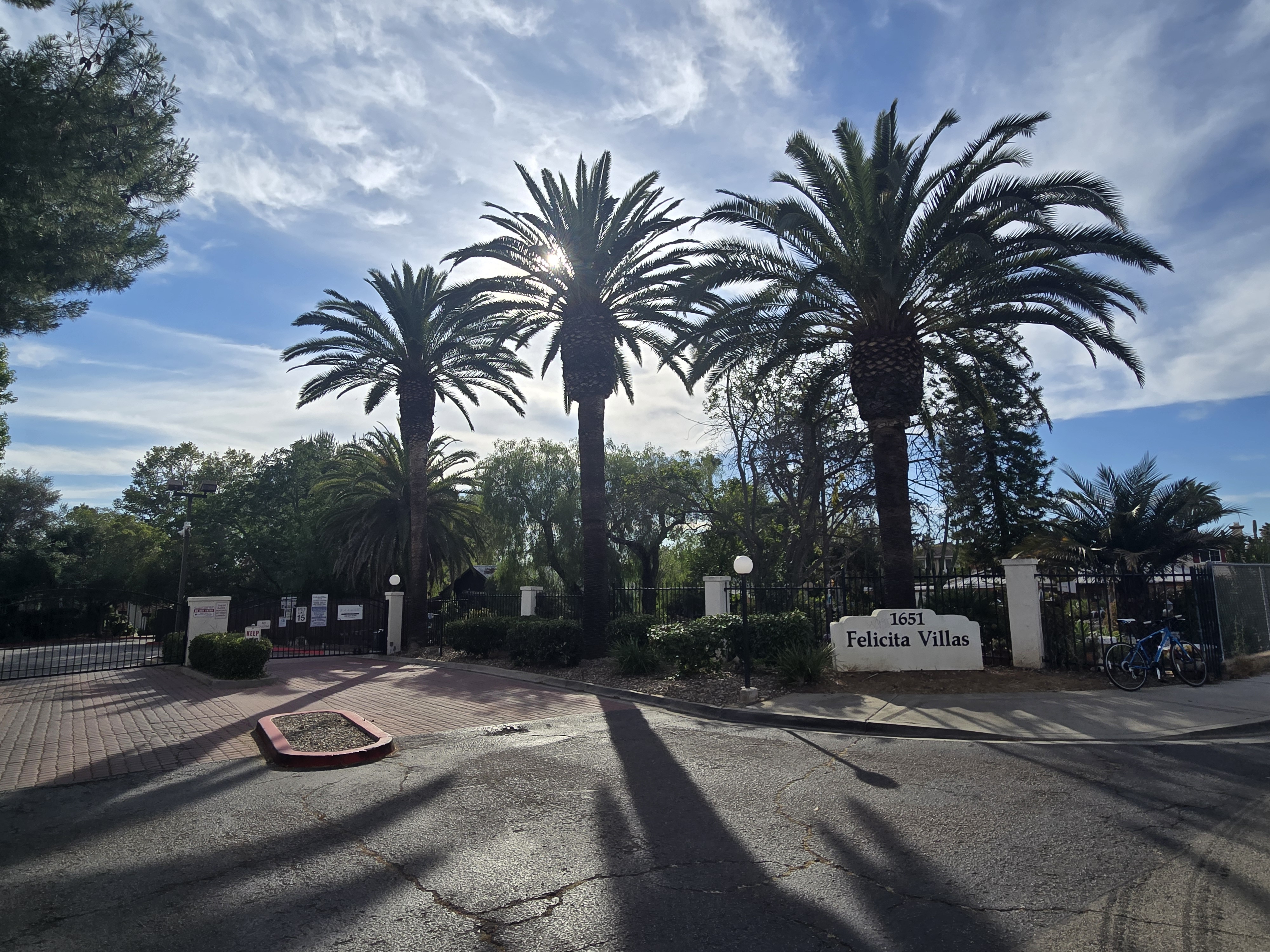
Felicita Villas is one example of how powerful mature CIDPs can be in a property landscape.
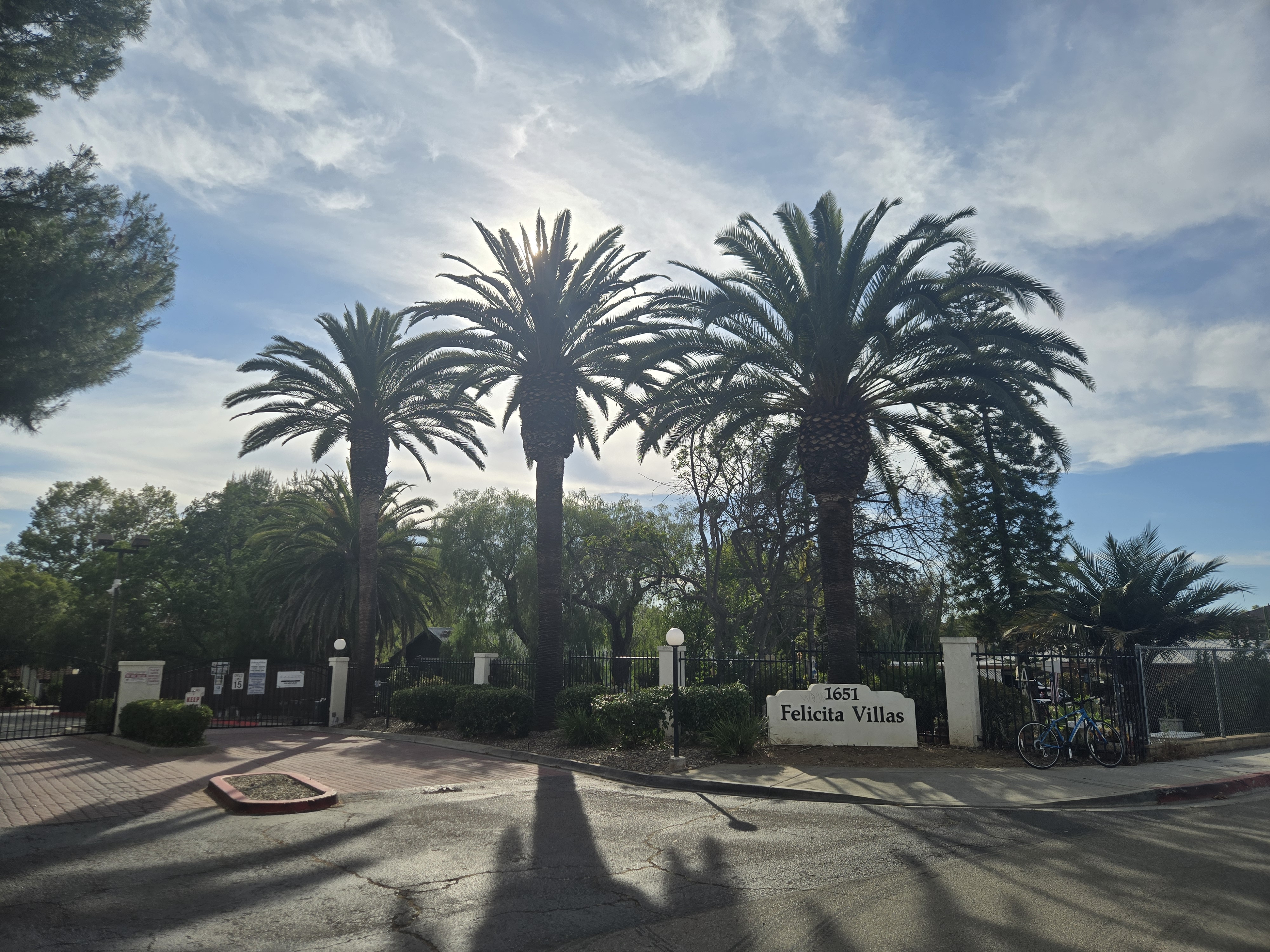
These palms shape the first view of the property.
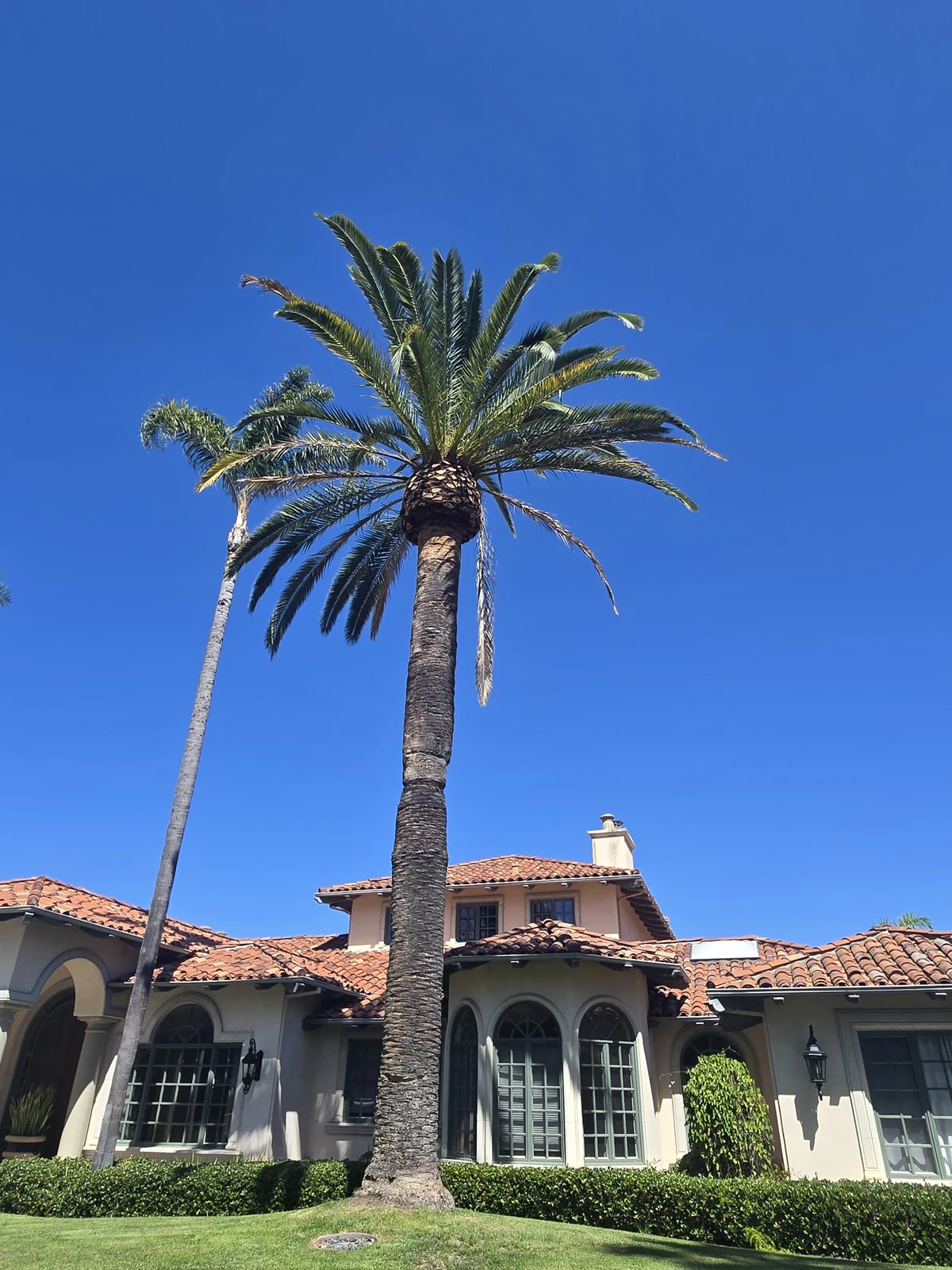
On a residential property, one mature Canary palm can carry the whole front landscape.
Then start counting the missing crowns
Old Escondido still has an unusual concentration of mature specimens. It also has gaps where palms declined, disappeared, or were removed. Once you start looking for the crowns, you notice the empty places too.
Not every struggling palm has the same cause, but South American Palm Weevil has changed the conversation for mature Canary Island Date Palms in Southern California. Waiting until a palm is clearly collapsing may mean waiting too long.
Owners of these palms should know which tree they have, keep a current photograph, and pay attention before decline becomes advanced. Treatment, nutrition, and irrigation decisions depend on the palm and site; waiting for collapse is not a plan.
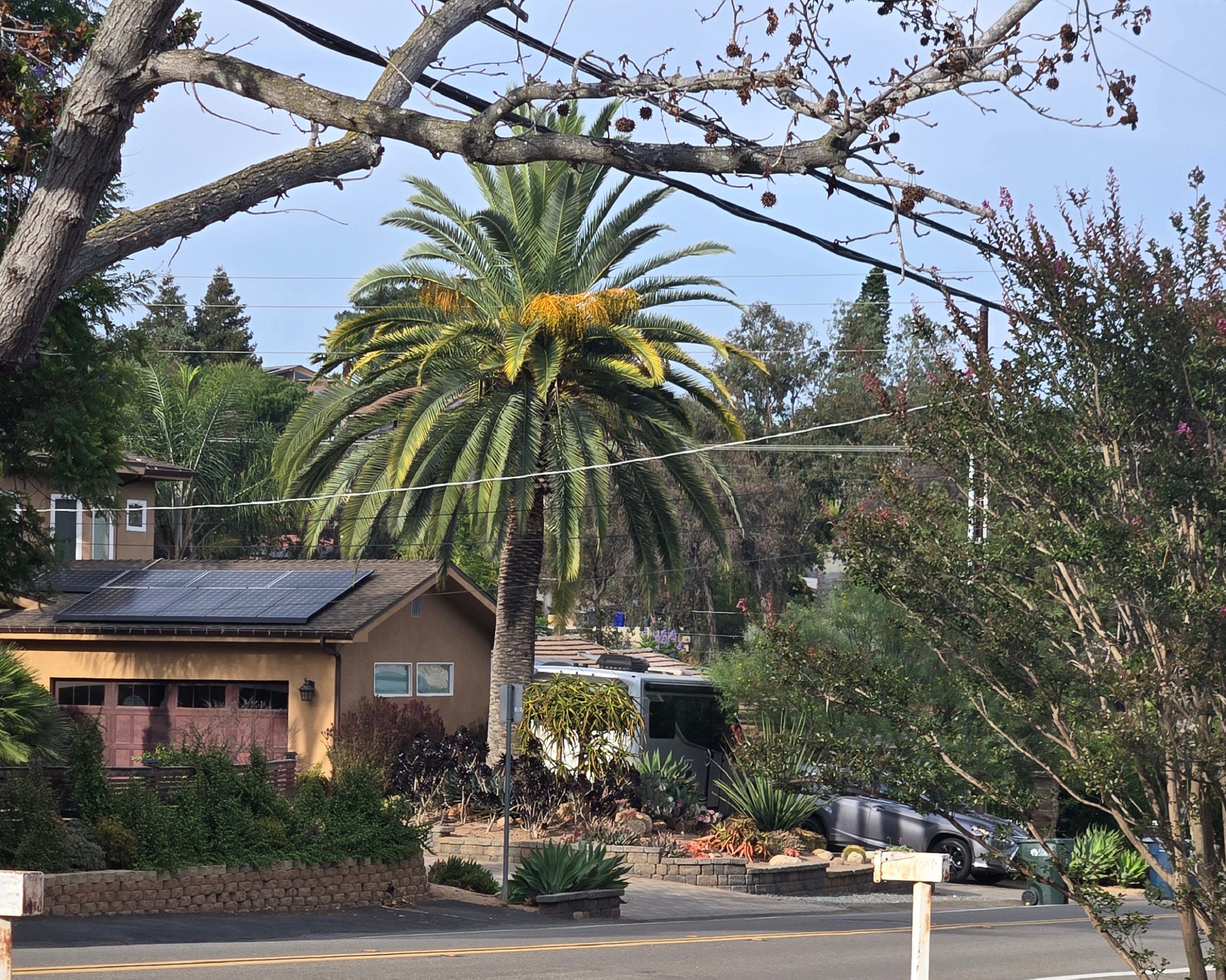
The strength of Old Escondido's palm landscape is how many mature specimens appear across everyday streets.
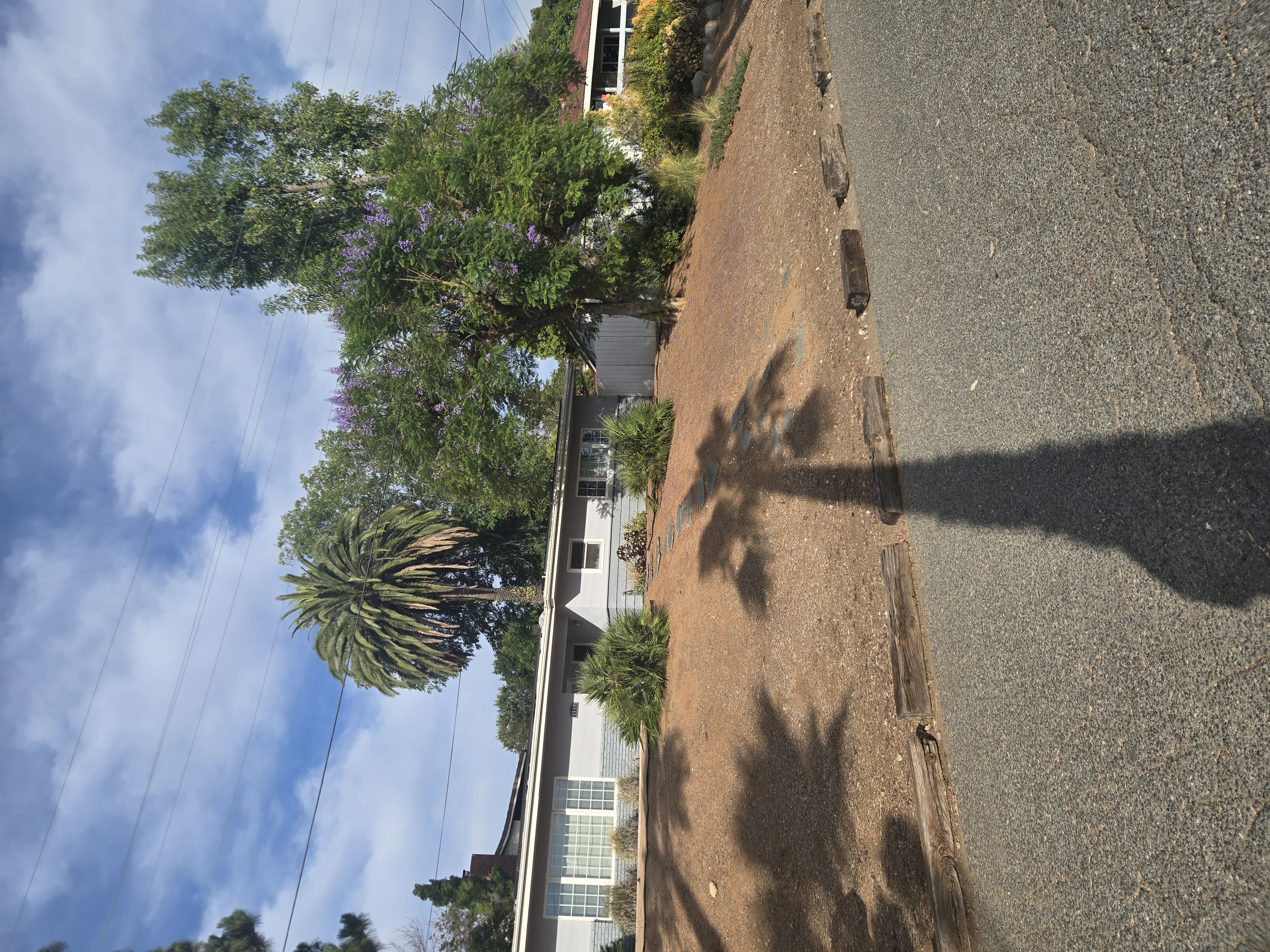
Older CIDPs are decades in the making and cannot realistically be replaced within a generation.
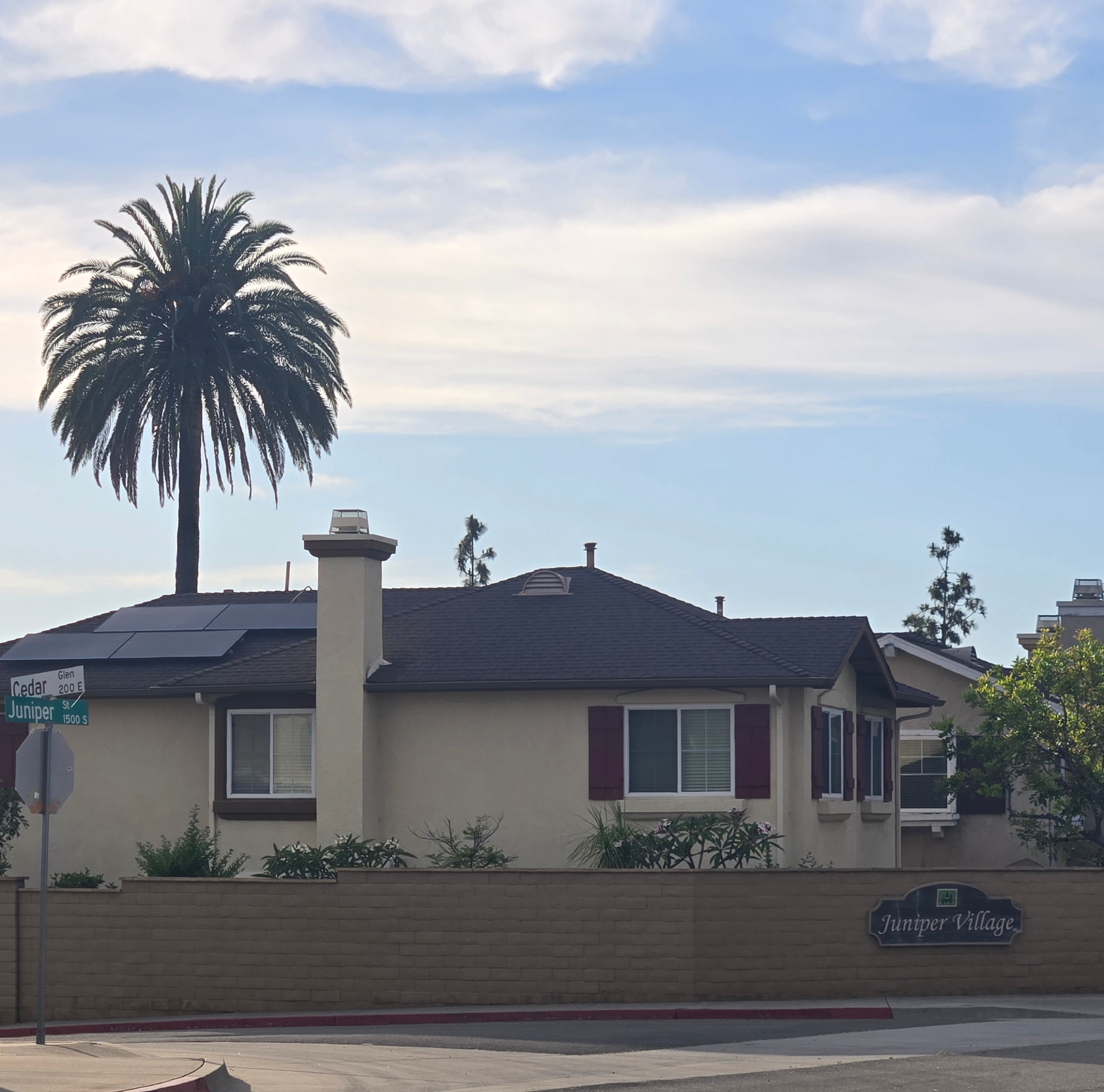
These palms are part of the neighborhood's identity, visible above homes, courtyards, and community buildings.
I live among these palms
One of the reasons I started San Diego Palm Protection is because I live among these palms. I see them every day. I see the healthy ones, the historic ones, the neglected ones, and the ones that are already gone.
These palms are part of what makes this place feel established and distinctly Southern California. I want us to recognize what is here before more of it is gone.
Old Escondido may not officially be the Canary Island Date Palm capital of Southern California, but after walking these streets, it is hard not to make the case.
If your mature Canary Island date palm changes in the crown, color, newest growth, or overall canopy, do not rely on memory. Photograph it and compare it with an earlier view.
Related resources: Palm Care in Escondido, Canary Island Date Palm Care, and Recurring Palm Monitoring.