Palm Health and Stewardship

What Healthy Palm Growth Looks Like

A compact educational comparison of healthy palm crown structure and stressed or over-trimmed examples.

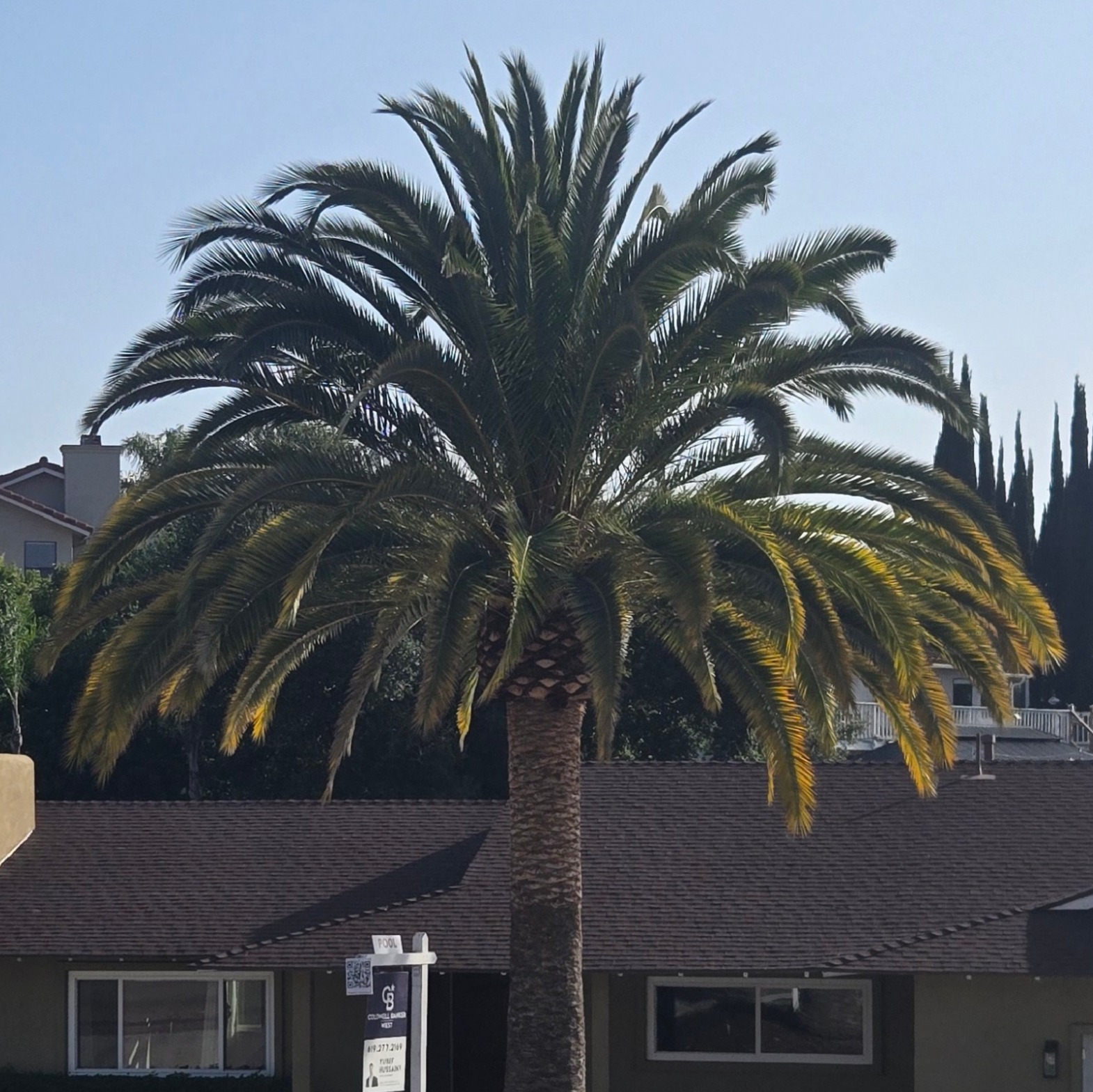
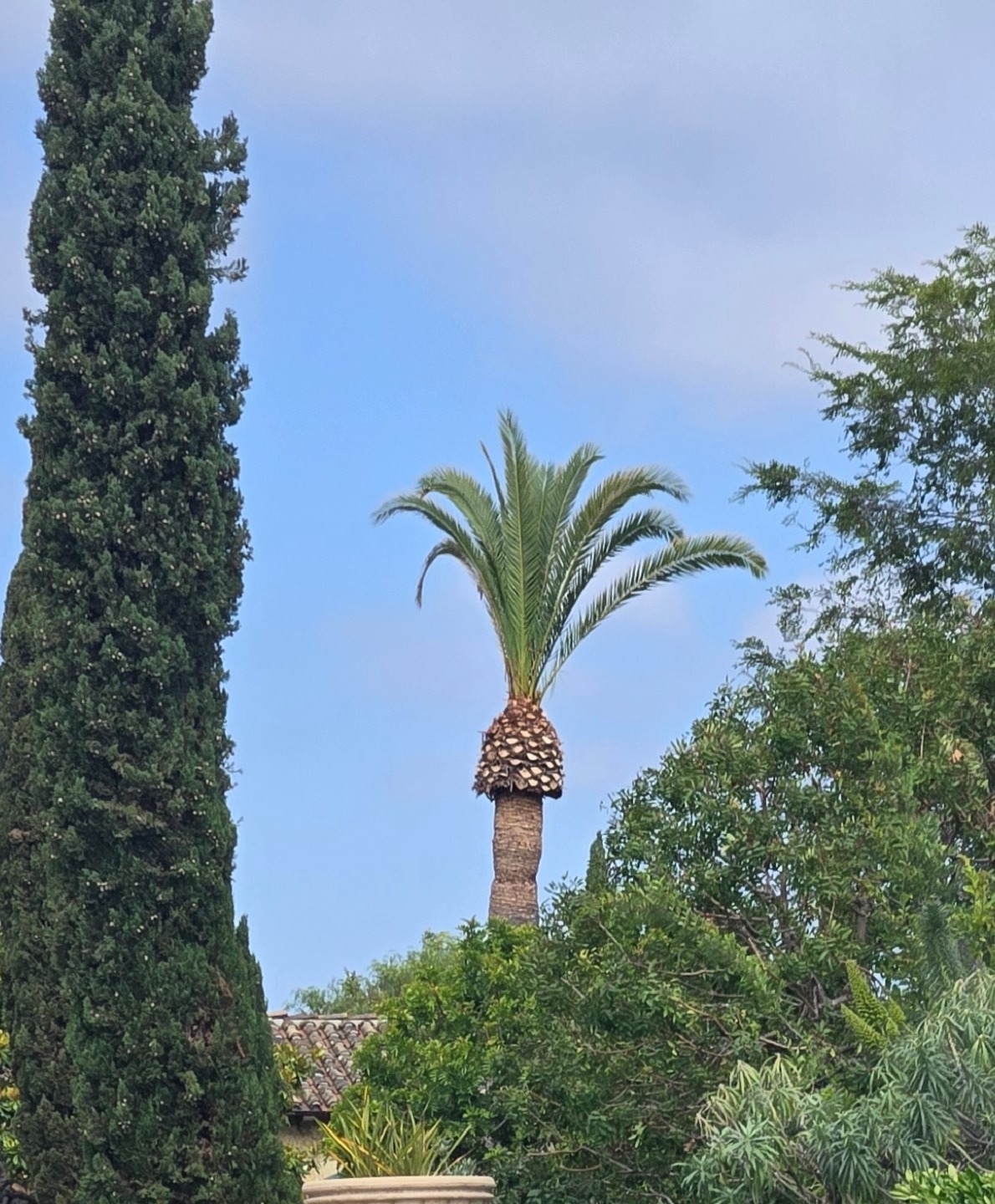
Healthy Canary Island Date Palm with full crown structure Over-trimmed Canary Island Date Palm with sparse crown

Healthy palms are often recognized by overall structure before anything else. A mature Canary Island Date Palm (CIDP) will typically show strong crown fullness, balanced canopy shape, and consistent frond development.

The comparison above shows two very different canopy styles: one fuller and more balanced, the other heavily trimmed with a much more limited canopy.

Healthy Canopy vs. Heavy Trimming

Healthy CIDPs are often recognized by strong crown fullness and balanced structure.

In contrast, aggressive trimming, sometimes called a "hurricane cut," may leave palms looking sparse and reduce the fuller, natural appearance many homeowners value. Preserving healthy green fronds is often part of maintaining a more balanced canopy over time.

Why Canopy Fullness Matters

Palm health is not only about pests or visible decline. Irrigation, nutrition, trimming practices, and long-term care all influence how a palm looks and performs over time.

What Homeowners May Wish To Watch For

  • Strong crown fullness and balanced canopy structure
  • Consistent green color and healthy new spear growth
  • Sudden thinning, yellowing, browning, or uneven growth
  • Over-trimming or repeated removal of healthy green fronds
  • Irrigation stress, nutrient issues, pests, or other signs of decline

Palm protection is not just reacting to problems - it is preserving healthy, attractive palms through observation and long-term care.

For ongoing care context, see Recurring Palm Monitoring, Canary Island Date Palm Care, and Palm Care in Rancho Santa Fe.

Seen something similar?

Share a palm observation or dated photograph. Submissions are reviewed privately and are not published automatically.

Request a palm assessment or call/text 262-492-3135.