
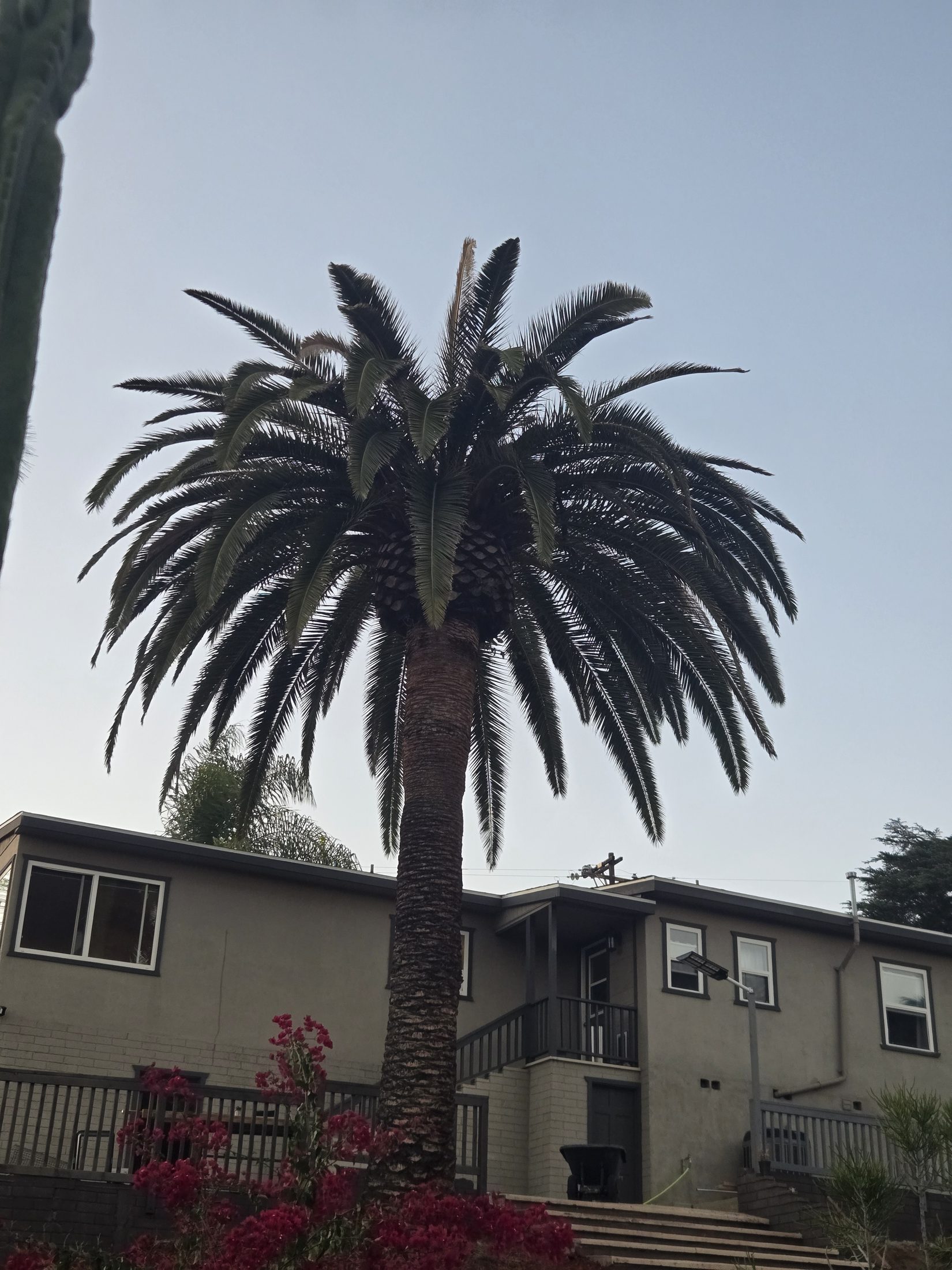
I recorded an adult South American palm weevil walking up the trunk of my declining Canary Island date palm in Old Escondido, then captured it. The video documents that adult observation. The photographs here document the palm and the neighborhood around it.
Those are related pieces of evidence, but they are not interchangeable. A declining crown in a photograph does not prove SAPW. A weevil on my palm does not diagnose every mature palm nearby.
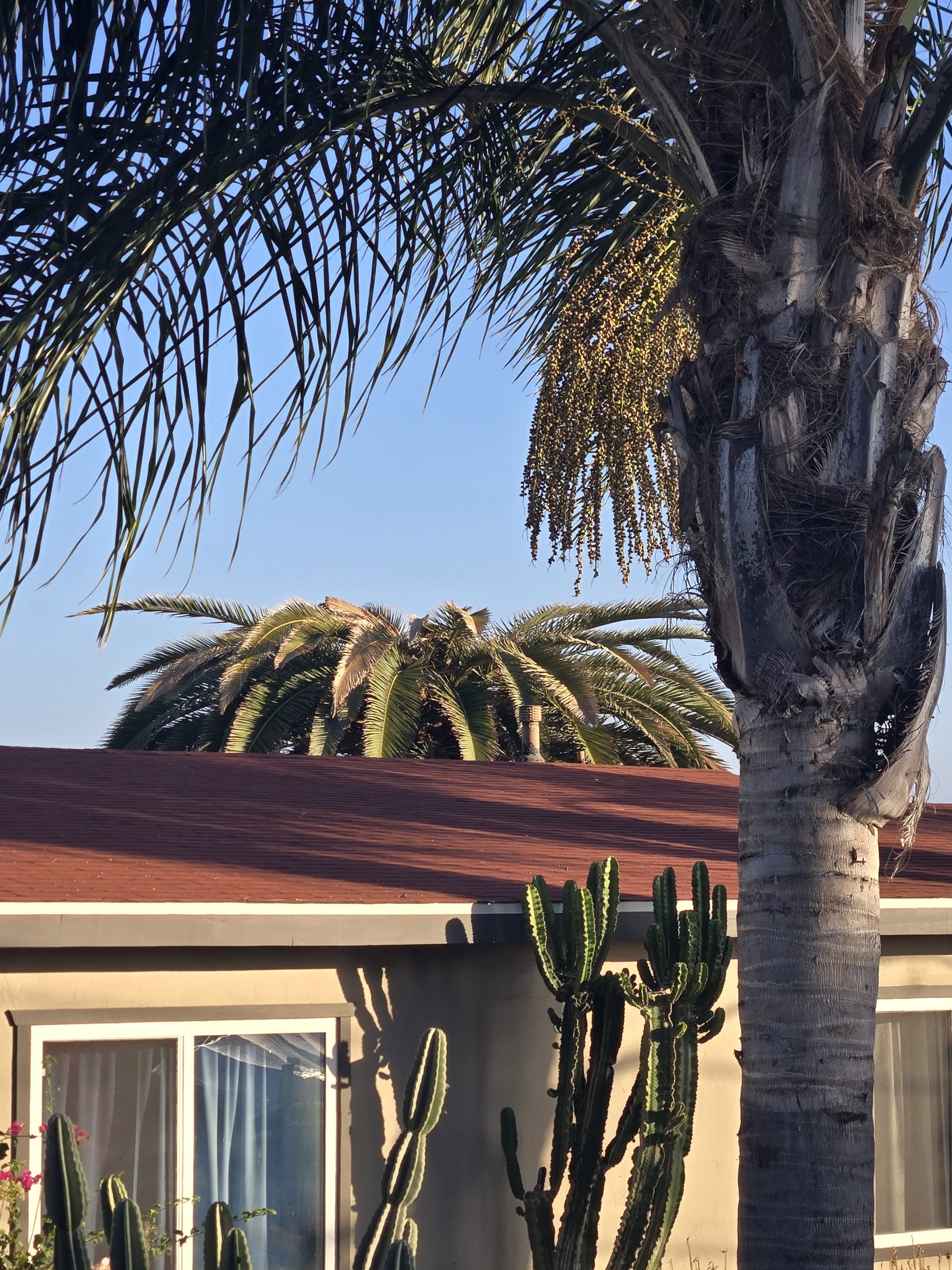
A nearby mature CIDP above the neighborhood roofline.
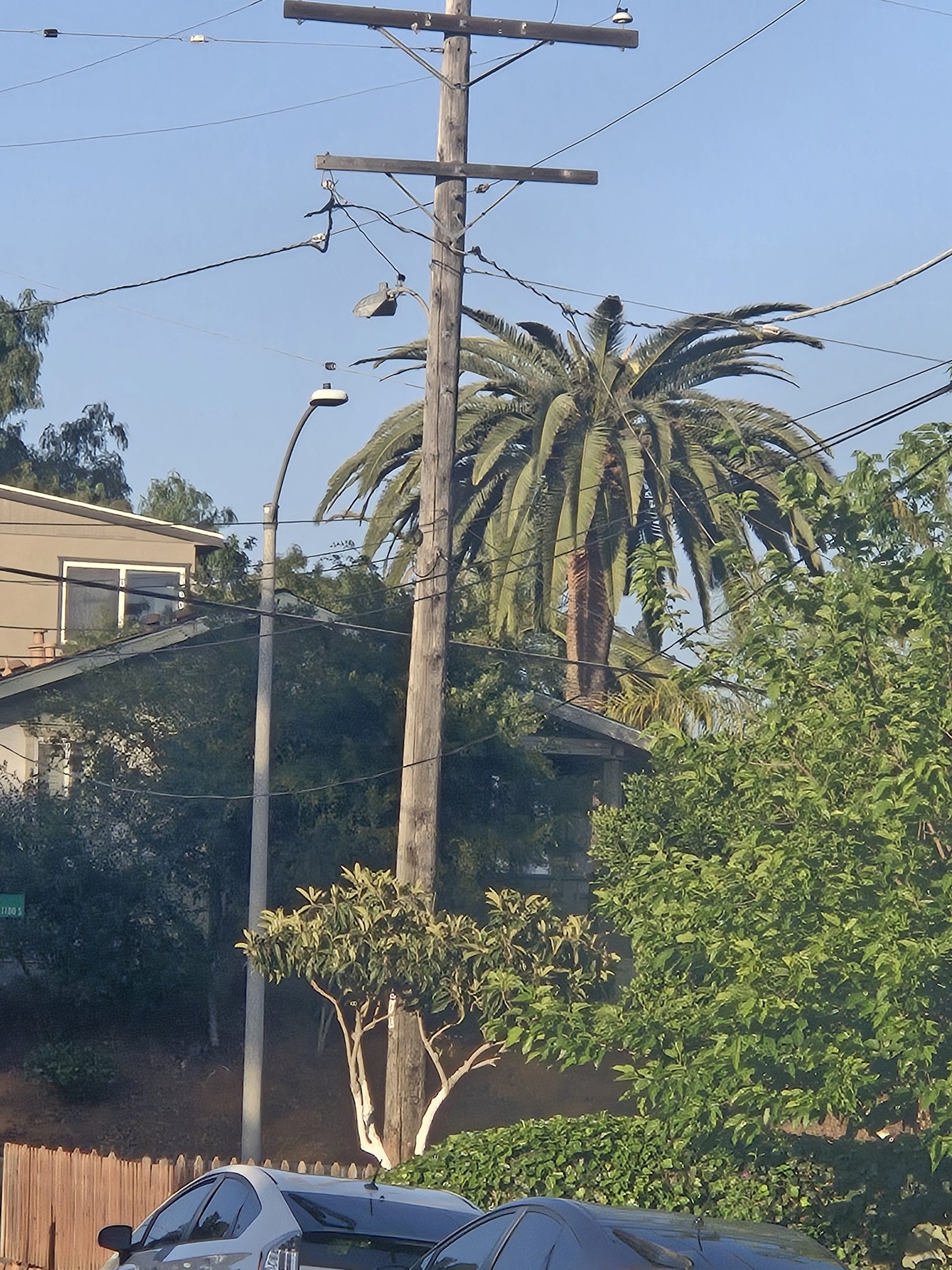
Another mature CIDP in the surrounding street context.
What I take from it
When a mature CIDP begins losing crown structure or its newest growth changes, I want dated whole-palm and crown photographs. If treatment is still appropriate, timing matters. If the cause remains uncertain, the record should say so.
No photograph or treatment guarantees an outcome. It does give me something concrete to compare on the next visit.
Related: Local SAPW Information, SAPW Treatment, and Canary Island Date Palm Care.